Making Electricity
A generator is a machine that makes electricity. It works by changing mechanical energy into electrical energy. We can understand how a generator works by looking at its parts, sizes, types, and uses.
The generator has two main parts: the rotor and the stator. The rotor is the moving part of the generator and has a magnet. The stator has wire coils around it and does not move. When the rotor spins, the magnet creates a magnetic field1 that generates electricity in the wire coils.
Generators come in different sizes. Some generators are small and portable, while others are big and can power whole cities. Small generators are useful for camping trips or when there is a power outage. Big generators are used in power plants to create electricity for homes and businesses.
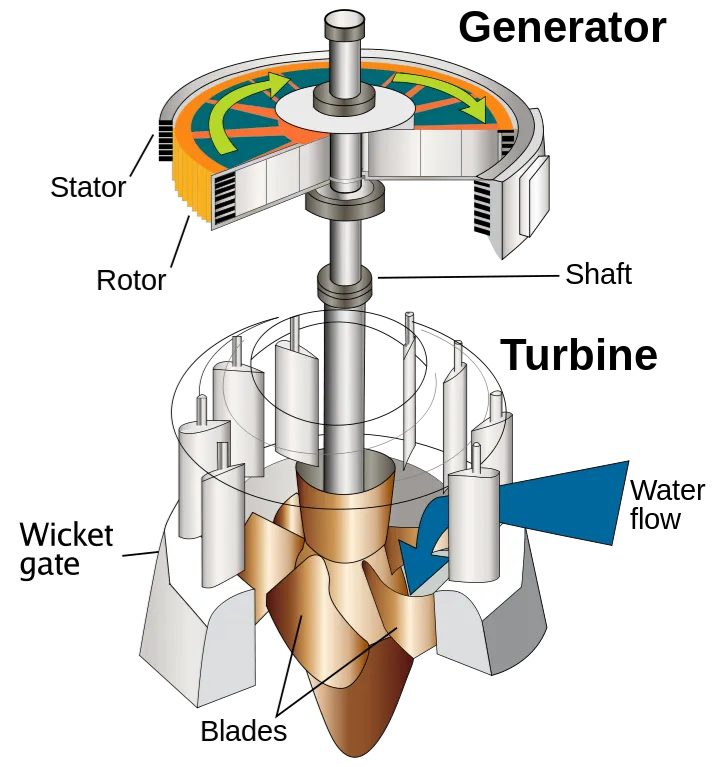
There are two types of generators: AC (alternating current) and DC (direct current). AC generators make electricity that changes direction many times per second. AC generators are used in homes and buildings because they can send electricity over long distances. DC generators make electricity that flows in one direction. DC generators are used in batteries, such as those found in cars or cell phones.
Generators have changed the way we live our lives. They make things easier by providing electricity when we need it. They are used in many different ways, like powering homes, businesses, and hospitals. Generators have become an important tool for people all over the world.
1 A magnetic field is like an invisible force that pulls or pushes things made of metal. It's a special kind of power that magnets
have, which can make other magnets or metal objects move or stick to them. You can't see it, but you can feel it when you play
with magnets or use a compass to find which way is north.

Bình luận