The Effects of the Steam Engine on U.S. History
The steam engine was an important part of U.S. history, particularly during the Industrial Revolution in the 19th century. Here are a few ways in which the steam engine changed U.S. history:
Transportation: The steam engine changed transportation in the U.S. by making it faster. For example, the introduction of the steam-powered locomotive (train) in the 1830s allowed for the transportation of people and things over long distances in a matter of days, instead of weeks or months.
Industrialization: The steam engine was important to the Industrial Revolution in the U.S. The steam engine provided factories with the power to make things more efficiently. For example, factories made textiles (material or fabric) for the production of clothing.
Urbanization: The steam engine helped cities in the U.S. grow. Fewer people worked on family farms in the country; more people worked in factories and businesses in cities. As a result, the population of Chicago grew rapidly, from around 300,000 in 1870 to over 3.3 million by 1930. This growth was in large part because the city became a center of transportation and industry, which was made possible by the steam engine.
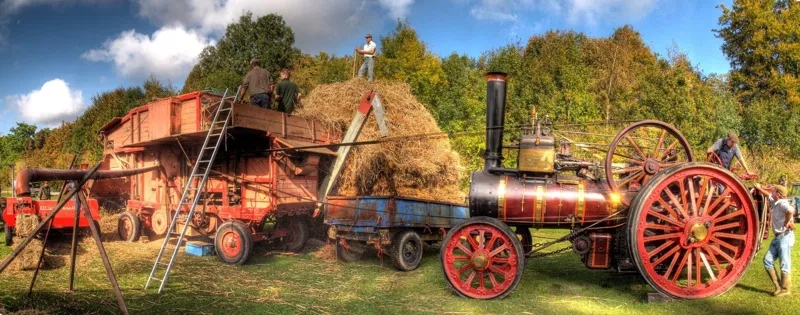
Agriculture: The steam engine changed farming, too. The steam-powered threshing machine allowed for the rapid separation of grain from the plant. This reduced the number of workers and increased productivity. This helped to feed a growing population. It also helped farming to grow throughout the country.
Overall, the steam engine played a key role in shaping U.S. history by transforming transportation, industry, urbanization, and agriculture, among other things.
READ
Beyond Electricity: Steam Heat in New York City
PREVIEW
1. What is steam? Describe it. How is it made? What does it do?
Sample Answer
✔ Steam is the gas that water becomes when it is heated to boiling point. It is made by boiling water. Steam can be used to power machines or heat buildings.
2. Steam can generate electricity. What else can it do?
Sample Answer
✔ Steam can also heat buildings, sterilize medical equipment, and cook food. It can be used to clean things and in industrial processes.
3. How can steam heat a building? How can steam cool a building?
Sample Answer
✔ Steam can heat a building by passing through radiators that release heat into the rooms. Steam can cool a building by using absorption chillers that use steam to create cold air.
4. What are the good things about steam heat? What are some dangers?
Sample Answer
✔ Good things: efficient, cost-effective, environmentally friendly. Dangers: steam pipes can explode, and steam can cause burns if not handled properly.
VOCABULARY TO KNOW BEFORE YOU READ
challenge (noun) - something that is difficult
efficient (adjective) - works well and does not waste anything
reliable (adjective) - dependable; something or someone you can trust
unique (adjective) - the only one of its kind
THINK ABOUT THE WORD "PIPE"
Here are some of the definitions from Cambridge Learner's Dictionary:
| Verb | Noun |
| to send something through a pipe | a long tube that liquid or gas can move through |
| (pipe up) to suddenly say something | a tube with a bowl-shaped part at one end, used to smoke tobacco |
| (pipe down) to stop making noise and become quieter | |
What is the same? What do these definitions have in common? Which definitions are useful in this story? Which are not? Why?
Sample Answer
✔ All definitions relate to a tube or cylinder shape. The noun definition "a long tube that liquid or gas can move through" is most useful for this story because it talks about steam pipes. The smoking pipe definition is not relevant.
| 
Bình luận