II. INTRODUCTION: SIMPLE AND CONTINUOUS VERB TENSES
1.0 What is a Verb Tense? What are Verb Tenses Used For?
Verb tenses coordinate action and time.
- Actions can happen anytime and anywhere. They can happen many times, and they can repeat, or they might be one specific action that happens at a very specific/exact time.
- They have information on when something happened, whether it is a repeating action or happens only one time.
- They tell whether there are time limits to the action or not.
- In English, they can also be used to show that a past time or action is connected to another later action or time. They can show a cause/effect relationship.
2.0 Language and Culture
The English language has been influenced by many different cultures. It is interesting that spoken English and written English are almost two separate languages. This is because about 80% of Spoken English comes from Germanic origins, while the written language of English is largely made up of Greek, Latin and Romance languages, such as French.
A famous linguist said that language is culture, and culture is language. For example, different cultures have different ideas about time.
- Hopi culture does not split time into past, present and future.
- In many Eastern cultures, time is more like a circle—things repeat again and again.
- Western culture generally divides time up into past, present and future—time always moves forward.
The Greek philosopher Aristotle had an influence on Western ideas about time, English Grammar and English Verb Tenses, though probably indirectly.
3.0 Western Culture and Aristotle's Ideas of Essence and of Time
It is important to note that there is no one 'correct' or 'better' way to view time; rather, ideas of time reflect and facilitate the life and ideals of the culture that they come from. They both form and serve the cultures that they come from. But it is important to understand the connection between culture and language.
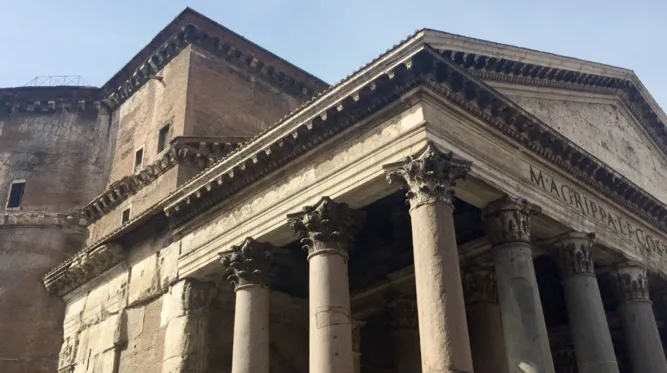
There are two ideas that Aristotle had that we see in two of the English verb tenses. They are the ideas of essence and of time.
3.1 Idea of Essence
When we describe something, we talk about the things that are part of who or what that thing is. For example, all elephants are the same. They are big, have a trunk and big floppy ears. These are the things that stay the same for a very long time. The essence of something is what doesn't change—it is mostly permanent. For example, Mary is a friendly and happy person. This is who she is—her essence. But if she is sick one day and is not happy and not friendly, that is temporary. It is not who she is.
Ví dụ: What makes an elephant an elephant? What is the essence of an elephant?
- Elephants are always big.
- They have a nose that looks like a snake and is called a 'trunk'.
- They have big ears and a short tail.
- They have two long curved 'teeth' called 'tusks'.
Aristotle liked to divide things into groups according to their essence—what is necessary for something to be what it is. Aristotle divided the animal kingdom into many groups that we use today, for example, one classification of animals, 'amphibian', is a Greek word. Each group had something that was essential to it.
It is important to understand that the essence of something are the main characteristics that last or endure over a long period of time. It is how something normally is—the things that don't change. It is who you are, or what something is, or what a situation is.
The idea of essence is an important part of the Simple Tense, because if something is true about someone or something for a really long time, it is a part of who they are or what something is. It becomes a part of who they are or what something is. We use the Simple Tense to describe the essence of something or of a situation.
3.2 Idea of Time
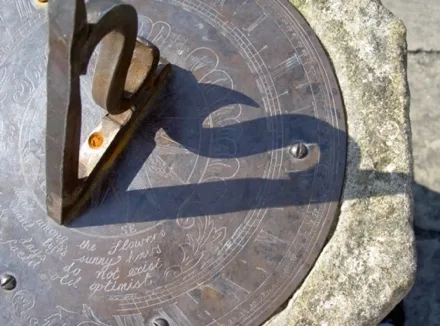
One of the things that Aristotle divided up was time. Aristotle saw that there were two types of time—time that could not be measured and time that could be measured. The Simple Tense and the Continuous Verb Tenses in English fit these definitions. The Simple Tense is for actions, ideas or situations which cannot be measured in time, and the Continuous Tense is for things which have a time stamp or for which we can assign a period of time. Whether or not Aristotle was responsible for this division of verb tenses, they do fit Aristotle's ideas of time and essence.
A comparison of the Simple Tense and the Continuous Tense will help us understand these two tenses. Study the following chart, which compares them.
Study Tip: Analysis is Learning!
When trying to understand something that is complex and which has many related ideas that are separated into different subtypes, it is often helpful to compare the different subtypes or the different groups within the larger area of study. One neuroscientist once said, "Analysis IS learning." So, look at how the different groups are related. How are they the same? How are they different? Below, the Simple and Continuous Verb Tenses are compared.
3.2.1 Basic Concepts of Time
Exercise: Understanding Verb Tenses and Aristotle's Ideas
Chọn đáp án đúng cho mỗi câu hỏi dưới đây dựa trên nội dung đã học.
1. Verb tenses give information about which of the following?
2. According to the text, spoken English is largely derived from which origins?
3. How does Western culture generally view time?
4. According to Aristotle, what does the idea of "essence" refer to?
5. Which verb tense is used to describe the essence of something (things that don't change)?
6. Which verb tense is used for actions that have a time stamp or can be measured?
|

Bình luận