VI. PERFECT CONTINUOUS TENSE: IN-DEPTH COMPARISON WITH OTHER TENSES
The Perfect Continuous Tense shares features of both the Continuous Tense and the Perfect Tense.
The perfect continuous tense contains the words perfect and continuous. So, we should expect that it will share features with both the continuous tense and the perfect tense.
- However, this is not in all aspects of both.
- Notice the following areas in which the continuous tense and the perfect continuous tense share certain features.
1.0 Length of Time
Like the Perfect Tense, the Perfect Continuous Tense focuses on when the action started or how much time has passed since the action started up until the time of speaking or writing. So, we are talking about a length of time. However, in the Perfect Continuous Tense, the action is expected to continue (thus adding more time).
Examples
I have been working since 8:00 this morning. (starting time)
I have been working for three hours. (total time)
The time words 'since' and 'for' are often used with the Perfect Continuous Tense.
Examples
Perfect Tense:

I have worked since 8:00 this morning. (starting time)
I have worked for three hours. (total time)
Perfect Continuous Tense:
• Expected to continue

I have been working since 8:00 this morning. (starting time)
I have been working for three hours. (total time)
2.0 Continuous vs. Repeated Action
3.0 Time Limits
4.0 Two Ways of Expressing Time and Action: Point in Time vs Period of Time
Like the ordinary Continuous Tense, the time of the action in the Perfect Continuous Tense is limited. There are two ways of expressing time and action, though there are differences:
- Happens at a point-in-time
- 'Fills up' a period of time
4.1 Point in Time
Like the continuous tense, an action is happening at and is centered around a point in time—like 6:00 p.m.; however, the time is also limited. The time is used as a Time Marker, and the action is obviously longer than a 'point in time'.
- So, the action started shortly sometime before that point in time and may continue after that point in time, but it is limited—it will not for a comparatively long period of time.
There are some important differences in how the Continuous Tense and the Perfect Continuous Tenses are used in the Past, Present and Future, and especially in the past tenses.
4.2 Fills Up a Period of Time
The action of the regular Continuous Tense can happen at a point-in-time, or the action can 'fill up' a certain time.
Examples
At 8 o'clock, I was washing my dishes. (point-in-time)
I was fixing my car all day yesterday. (action 'fills up' a period of time)
Like the Continuous Tense, the action of the Perfect Continuous Tense can also fill up a larger period of time for total time until now (or another point in time). I have been studying at the university for 3 years. Three years are complete, but it is not finished yet—it is expected to continue, but for a limited time.
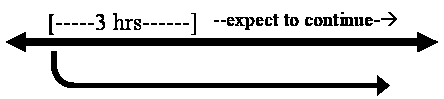
A comparison with the regular Continuous Tense shows that:
- The stated time is a longer period of time. The starting time and ending time are not mentioned but can usually be implied.
- The action in both the regular Continuous Tense and the Perfect Continuous Tense is expected to continue past the time of speaking.
Examples
I have been studying for 3 hours (but I expect to continue studying).
I have been working at the library (I expect to continue for some time, but it is not likely a permanent job).
Exercises
Exercise 1: In this exercise, examine how the Perfect Tense and the Perfect Continuous Tense are used in the past, present and future.
Reading this should help your brain to connect the abstract ideas of the perfect tense with how you could use it in real life. First, underline the verbs in the Perfect Tense and put the verbs in the Perfect Continuous Tense /between slashes/. (Bài tập đọc hiểu - không có ô điền)
 The world has been changing rapidly because of technology. It seems like the pace of change keeps increasing and increasing. It has been increasing exponentially. For example, from the time that personal computers were first invented until now, computers have been getting faster and faster and they have been getting more and more powerful.
In the past, machines started to do the work of humans, but more and more, robots have been doing the work that people have done before. But, to this point, this has been physical work. Now, professional jobs that require thinking and creativity are also being eliminated, and they are being done by machines—computers.
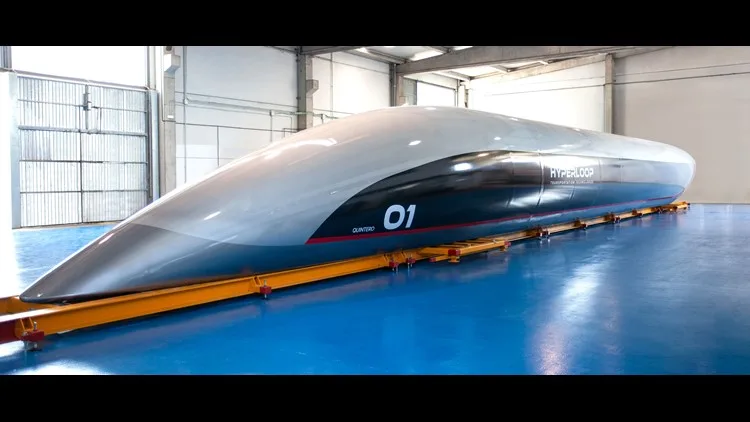
Transportation has also been changing. Since the time that gasoline cars have driven down our roads, they have become more and more sophisticated. They have become more and more complex. But they are being replaced by other types of transportation. Trains have also been changing to the point where now they have been travelling on magnets or in tubes at speeds at which only airplanes could fly in the past.
All of this has made people afraid of the New World. They will soon be in a place where their jobs will have disappeared.
Exercise 2: Using the Perfect Continuous Tense, write three sentences on the following topics.
a. What are three things that have been happening in the world recently that are likely to continue for a while (but with time limits—not forever)?
1.
2.
3.
b. What are three things that you have been doing recently? Use the Perfect Continuous Tense to write your sentences.
4.
5.
6.
Exercise 3: Choose the Perfect Tense or the Perfect Continuous Tense in the paragraph below.
Then, write the correct verb form in the blanks in front of the verb that is in parenthesis. The tenses could be in the Past, Present, or Future. Nhập câu trả lời vào ô trống.
7. Sakarno (1) (have) a hard time lately, and he doesn't know when it will end.
8. Everything (2) (go) wrong.
9. First, he (3) (have) a number of problems with his car.
10. His engine (4) (make) funny noises, and he (5) (have) problems with his brakes.
11. His air conditioning (6) (quit), and it is very hot outside.
12. His radio (7) (have, also) working, and he loves to listen to music.
13. Before the radio broke, he (8) (listen) to slow soothing music, because it helped him to relax.
14. But now, he doesn't have a way to calm down after work, so this (9) (be) difficult for him.
15. His stress level (10) (rise), so he can't get to sleep at night.
16. He (11) (be) tired at work for the last week.
17. He (12) (do, not) a good job either, so his boss (13) (be, not) happy with him.
18. He (14) (get along, never) well with his boss, and now it's even worse.
19. He (15) (think) a lot about quitting lately.
20. He imagines that someday he (16) (have) enough, and he's worried that he will suddenly just quit.
21. But then, he remembers that he (17) (have) trouble paying his bills, too, so if he quit, it would be another disaster.
|

Bình luận