I. INTRODUCTION TO COMPARATIVES
2. Comparatives for Showing Similarities and Differences

2.1 Things That Are Different
The suffixes '-er' and '-est' are used in connection with nouns, adjectives and adverbs.
Adjectives with '-er' and '-est' and also with 'more' and 'less' are often used to describe differences. They are not used to describe similarities.
Examples
Marta is better at math than Jorge.
Marta is the smartest in her class.
Jolanda is more intelligent than most people.
Adjectives with '-er' and '-est' are used with single-syllable adjectives and some two-syllable adjectives. Adjectives with three syllables as well as some two-syllable adjectives use 'more' or 'less'.
'-er' is used to describe something when only two things are being compared. In mathematical terms, it means A > B or A < B.
'-est' is used when comparing three or more things.
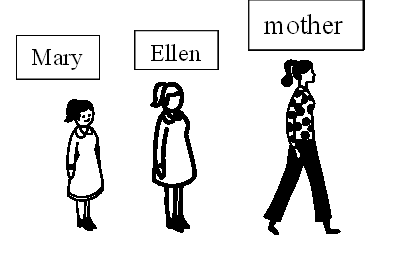
Examples
Mary is shorter than Ellen. (Mary < Ellen)
Ellen is taller than Mary. (Ellen > Mary)
Their mother is the tallest. (Mother > Ellen and Mary)
| 
Bình luận