II. SOCIAL FUNCTION OF MODALS: MODALS FOR SOCIAL INTERACTION AND ENGAGEMENT
3. Summary List of Modals of Social Interaction: Social Interactions and Negotiations
3.1 Willingness, Promises and Intentions
Examples
I can go to the store to get some cheese. (willingness)
I will call you tonight! (promise)
I should be able to finish this by 4:30 p.m. (intention)
3.2 Permission
There are both simple and phrasal forms of this modal.
3.2.1 Simple
Examples
You may use this desk if you would like to.
You can use my laptop if you need it.
3.2.2 Phrasal
While simple modals of permission use 'can' and 'may', the phrasal modal is 'be allowed to'. The same form of modal is used to make a statement. Note that there are past and future forms of the phrasal modal of permission.
Examples
I was allowed to use my friend's car to drive to Chicago.
We were allowed to go to the theatre alone when we were kids. (past)
My brother will be allowed to drive my mother's car when he is 18. (future)
3.3 Requests and Offers
Examples
Could you put this plastic in the recycle bin?
I could help you finish cleaning your car.
3.4 Preference
Example
I would rather watch an action movie.
3.5 Prohibition (Must Not Do)
Examples
You must not touch this wire. It is live, and you could get severely injured.
You cannot use this hairdryer—it belongs to me.
3.6 Advice
There are various levels of intensity when giving advice.
3.6.1 Weak Advice (Could Do)
Examples
You could call Gina and ask her to do it.
You might talk to your boss to see if you could get time off.
3.6.2 Medium to Strong Advice (Should Do)
Example
You should get an electric bike to go to work. It would save you a lot of money.
3.6.3 Absolute Advice—Obligation (Must Do—Don't Have a Choice)
Examples
You have to study, or you will not get a good grade.
You must catch the 6:00 train, or you will be late for work.
Study Tips: Understanding Your Brain
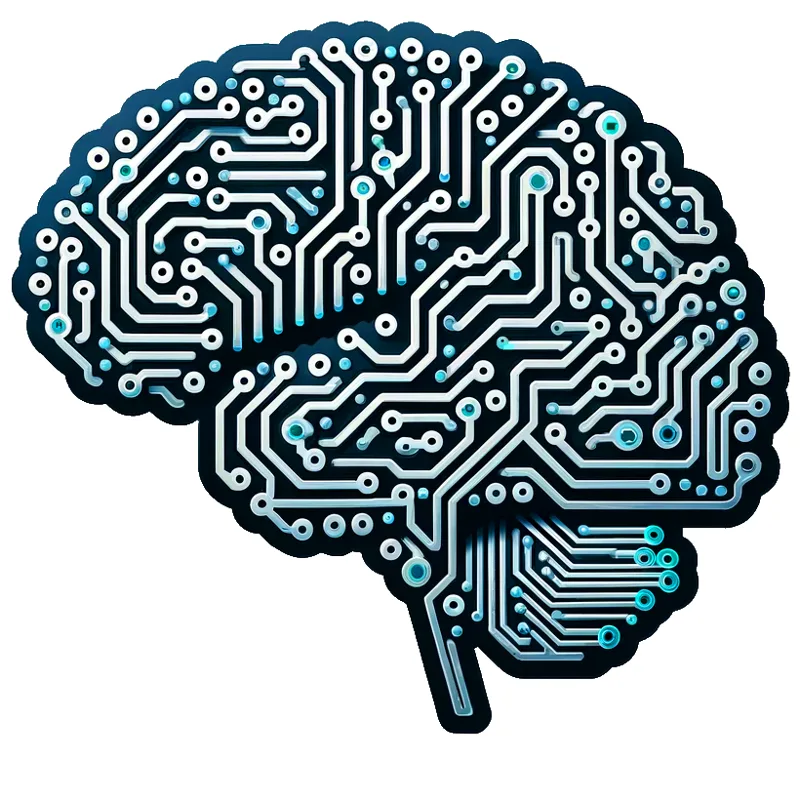
While we often compare computers to the human brain, your brain is actually very different than most computers. Somehow, our brains are much better than computers (though this is changing), at least for some things.
So why are our brains so good?
- It is about processing power.
- Modern computer chips actually have much faster processing power than a neuron, which is the computer chip of the brain.
- Some have more than one core. A core is like a mini-computer chip inside of a chip. Some computers are 4 core, 8 core, etc. This allows modern computers to do many things at one time. The computer divides up the work and gives each core part of the work.
- Our brains are so good because our brain is a multi-million core computer chip. Wow!
- The effect is that your brain can recognize patterns very easily and very quickly. So it is very good at learning.
- For example: We know that elephants follow a pattern, and we instantly know when we see an elephant. They have big ears, short tails, four thick legs, a long snake-like trunk, and two long 'teeth' called tusks, that stick out in front of their heads.
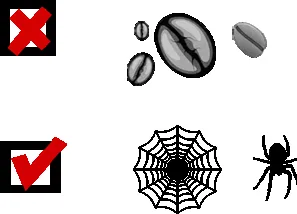
Everything in our brain is connected! It is not like a jar full of individual coffee beans. It is like a spider web. To get the bug (find the information we are looking for), find something in our brain that it is connected to and then just pull out everything that it is connected to. For example: When we lose something, we can try to remember what we were doing and where we were doing it when we lost that something.
What to do?
- Understand the web pattern/design!
- Memorize the web form (outline).
- Everything else sticks to the web, like a bug sticks to a spider web. If you have a web, everything else sticks to it more easily.
- Look at and memorize how the Modals are connected to verbs in two ways: Social Function and Descriptive/Interpretive Function. Then look at the things that are connected to these two functions. Memorize the different functions of each and analyze/memorize HOW they are connected (their function).
| 
Bình luận