II. SOCIAL FUNCTION OF MODALS: MODALS FOR SOCIAL INTERACTION AND ENGAGEMENT
4. Categories of the Social Function of Modals
4.2 Permission and Prohibition (Social Regulation)
4.2.1 Permission: Can, May, BE Permitted, BE Allowed
When giving permission for someone to do something, we use 'can' or 'may'. 'May' is considered more formal and polite. It is more often used in work situations or formal situations. It is also used when asking permission to use something or to do something rather than being used to give permission to use something or to do something. When we are requesting something, we usually want to be more polite.
- There are both simple and phrasal forms of this type of modal.
- There are different levels of intensity and formality associated with these modal forms.
- 'can' is informal and not very strong
- 'may' is more formal
- 'must' is very strong
Permission is related to social control. It is usually used in a situation where there are certain rules in place or when someone has control over something or over behavior in a certain place or situation. We use 'may' or 'may not' for this function.
'Can' is usually used more informally; however, like 'may' it can also be used when someone has control over something. It is less formal than 'may' and is usually used in a situation in which formal or pre-determined rules are not in place. Rather, it is used in a situation where someone usually owns something or when someone normally has control over behavior in a certain place or situation.
Examples
You can watch TV if you want to.
You may watch TV if you want to.
Phrasal Forms:
- 'BE permitted' and 'BE allowed' are the most formal of these modals and are usually used to refer to rules or laws in an official setting.
- 'BE permitted' and 'BE allowed' are not actually modals; rather, they are passive verbs with the verb BE + participle form.
- While they are verbs, they do have the same function as modals.
- These forms are the most formal, and they also have an official aspect to them.
- These modals can be preceded by a noun form (gerund or noun phrase).
Example
Smoking is not allowed here.
Since these modal-like phrases are actually verbs, when they are followed by a verb, the verb takes on an infinitive form.
Example
You are not permitted to smoke here.
While simple modals of permission use 'can' and 'may', the phrasal modal is 'BE allowed' + infinitive or 'BE permitted' + infinitive. Note that there are past and future forms of the phrasal modal of permission. There are also negative forms (not permitted to, not allowed to).
Compare:
Simple:
• You can/may use my laptop.
Phrasal: This has a more official aspect to it.
• Am I allowed to use this phone?
• I was allowed to use my friend's car to drive to Chicago.
• We were allowed to go to the theatre alone when we were kids. (past)
• We were permitted to leave early from class because we had an important meeting. (this is more official and rule-based)
• We will be allowed to leave at 4:30 p.m. today.
Phrasal verb forms may come after gerunds used as noun subjects, and they are often followed by infinitive verbs because they refer to a particular action:
Examples
Smoking is permitted only outside of the building. (refers to the noun subject 'smoking')
You are permitted to smoke only outside of the building. (modal followed by infinitive)
Simple Form:
- 'can' + base form of verb
- 'may' + base form of verb (formal)
- 'must' + base form of verb
Negative Forms:
- cannot, can't
- may not (formal)
- must not
Examples
You may use this desk if you would like to.
You can use my laptop if you need it.
You must not talk during the test.
A: Can I use your pen?
B: Sure, go ahead.
A: May I open the window? It's hot in here.
B: Sure, but make sure that the screen is closed. We don't want any bugs to get in.
4.2.2 Prohibition: Cannot, Must Not, Not Permitted, Not Allowed
Modals are also used to prohibit (stop) someone from doing something. This is the highest level of pressure. It means that there will be serious negative effects if someone does this. They could be a government law or the rules of a facility or organization.
Again, 'not permitted' and 'not allowed' are the most formal, and they also have an official aspect to them. Past and future forms can be used.
Examples
You must not touch this wire. It is live, and you could get electrocuted and die if you touch it.
You cannot use this hairdryer—it belongs to me.
Passengers must not smoke on an airplane.
You are not permitted to use this machine. It is dangerous if you don't have training.
You are not allowed to use this copy machine. It is only for administrative use.
Am I allowed to use your espresso machine? (question)
Exercise 1: Write any modal of Permission or Prohibition in the following descriptions for visiting these important royal palaces or capitol grounds and buildings.
(Bài tập đọc hiểu - không có ô điền)
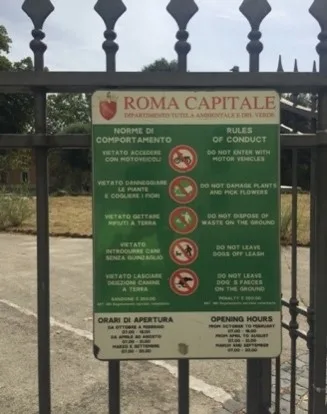
Rules for the capital grounds in Rome, Italy
• You are not permitted to enter with a motor vehicle.
• You are not allowed to damage plants or pick flowers.
• You may not dispose of your garbage on the grounds of the capital.
• You must use a leash if you have a dog.
• You must clean up after your dog if they leave a mess.
Rules for visiting the Emperor's Palace in Japan
The public is generally not permitted on the innermost grounds of the Emperor's Palace in Japan; however, on the day after New Year's Day and on the emperor's birthday, the public is allowed to enter the inner grounds to see members of the emperor's family. Of course, you are not allowed to get too close. The emperor's family appears on a balcony to give a short speech.
During the rest of the year, you may tour the outer grounds of the palace. However, you must make reservations to do this. You can also see the East Gardens of the Imperial Palace.
Exercise 2: Write the modals in the following paragraph. Discuss with a partner why you think each was used in this context (or write your opinion in brief notes).

Rules for Touring the U.S. Capitol Building
• You must go through a security check and leave all large items, such as backpacks, behind.
• Food and drinks are not allowed in the Capitol Building.
• You must not touch any objects of art, such as statues.
• You are not permitted to go into any areas that are blocked by ropes.
• You must not run, push, yell, or do anything that could disturb others or potentially damage the building.
• You may talk in the building, but you are asked to use a quiet voice.
• You may bring your cell phone into the building, but it must be turned off while you are in the building.
Rules for Touring Buckingham Palace (Palace of the Queen of England)
• You cannot bring food or drink onto the palace grounds, except for bottled water.
• If you would like to eat something, you may get food at the Garden Café.
• You may not bring a baby carriage onto the palace grounds; however, you can borrow a baby carriage. Breast-feeding your baby is also permitted.
• Carrying anything that could be used as a weapon, such as a knife, is not permitted on the grounds. It is illegal.
• Bicycles and skateboards are not allowed on the grounds.
• Visitors must be screened before entering. Before they are screened, they must remove anything made of metal from their pockets.
Exercise 3: Write a modal for Permission and Prohibition from the following conversations.
Student A is someone who is not very polite, while Student B is someone who always tries to be polite. The teacher is quite traditional and is more formal. Nhập câu trả lời vào ô trống.
Exercise 4: Fill in the blanks with one of the following modals with the indicated verb.
Use can, cannot, may, may not, BE permitted to, BE not permitted to, BE allowed to, BE not allowed to. Be sure to keep in mind the aspects of intensity and official functions of the modal. Remember that the phrasal modals 'BE allowed' and 'BE permitted' are not true modals. They are already verbs, so these forms must be followed by an infinitive. Nhập câu trả lời vào ô trống.
School Situation
1. A: (1) I use your eraser for a minute? I made a mistake on my test.
2. B: Yes, you (2) , but I need it back right away. I also made a mistake.
3. Teacher: Excuse me, you (3) to speak during an exam.
4. A: Sorry, I was just asking Tomas if I (4) use his eraser.
5. Teacher: Well, next time you should raise your hand and ask me about it first.
A: Okay, well (5) I use Tom's eraser?
6. Teacher: Yes, you (6) . If he agrees, that is.
7. B: Yes, he (7) use my eraser.
8. Teacher: Yes, well then you (8) use his eraser.
Exercise 4: Fill in the blanks with one of the following modals with the indicated verb.
1. We (use) our cell phones during the meeting. (use the past tense)
2. You (use) this study room while you are staying here.
3. You (get) a cold drink from the refrigerator if you are thirsty.
4. Starting next month, we (drink) coffee in the library. Maybe I won't keep falling asleep in the library anymore.
5. I (use) your phone to call for a taxi?
6. You (park) here only between the hours of 3:00 PM and 4:00 PM in the afternoon.
7. You (call) the office between the hours of 9 AM and 5 PM.
8. This sign says that only guests of the hotel (use) the pool.
9. I (use) one of these pens to fill out the application form?
Exercise 5: Use the following phrases to write sentences that use modals for Permission and Prohibition.
You will need to add the modal that is in [square brackets]. You may also need to add words such as the verb 'BE' or change verbs to an infinitive form as you do this. You also may need to change the order of the phrases. In some cases, there are two clauses, with one following the right arrow (→). Use the conjunction that is in the (round brackets). Use 'can', 'cannot', 'may', 'may not', 'are permitted', 'are not permitted', 'are allowed', or 'are not allowed' for the following sentences. Nhập câu trả lời vào ô trống.
1. [permitted]: take / employees / 15-minute break / every two hours
Trả lời:
2. [may] anytime / call / she / after 3:00 p.m.
Trả lời:
3. [permitted (not)]: after 10:00 p.m. / use the laundry facilities / residents
Trả lời:
4. said that / the teenager's mom → [allowed (not)] is / stay out / after 10:00 p.m. / on school days / he
Trả lời:
5. [can]: at my place / stay / you → (when) on your vacation / you / are
Trả lời:
6. [may] the common room / use / of the building / residents → (if) they / one week in advance / reserve it
Trả lời:
Sample Answers
1. Employees are permitted to take a 15-minute break every two hours.
2. She may call after 3:00 p.m.
3. Residents are not permitted to use the laundry facilities after 10:00 p.m.
4. The teenager’s mom said that he is not allowed to stay out after 10:00 p.m. on school
days.
5. You can stay at my place when you are on your vacation.
6. Residents may use the common room of the building if they reserve it one week in
Exercise 6: Write six rules for visiting a zoo.
Use the different modals that are indicated. Nhập câu trả lời vào ô trống.
1. (must not)
2. (not permitted)
3. (not allowed)
4. (can)
5. (must not)
6. (may)
| 
Bình luận