II. BUILDING COMPOUND AND COMPLEX SENTENCES
1. Compound Sentences: Joining Two Independent Clauses
1.2 Paired Conjunctions
Besides the solo conjunctions, there are also paired conjunctions, which are used in each of the independent clauses. Instead of using two independent parallel clauses to express an idea, a paired conjunction emphasizes that the two ideas are connected in some way. Each clause gets one of the Conjunctions.
Note: It is more common to use paired conjunctions to join words rather than to join clauses. Using paired conjunctions often comes across as being too formal, and it can also be confusing.
Either/Or
One thing is possible, or either thing is possible, but both are not possible.
Example
Either he is greedy, or he really needs money badly.
Neither/Nor
This is the same as 'either/or', but it is in the negative. One thing is not true or possible, and the other thing is not true or possible.
Example
He is neither rich, nor is he famous.
Both/And
Emphasizes that both things are true or are possible. With 'both/and', an easier or less clumsy way to express this would be to join just the two parallel words with a single conjunction.
Example
She is both kind and generous.
Not only/But also
Like both/and, but it emphasizes that we might not expect to include the second option.
Example
Not only is she kind, but she also donates a lot of money to charity.
Note: with 'but also', the normal pattern of use is: but + subject of the sentence.
Exercises
Exercise 1: In the paragraphs below, write the coordinating conjunctions that join independent clauses.
Write the coordinating conjunctions that join only words or phrases.
A Short Biography of Nikola Tesla
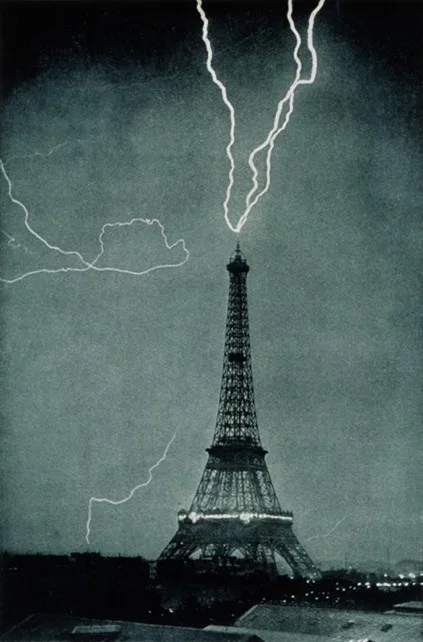
Nikola Tesla did more to advance our understanding of electricity than any other person in the history of humanity. He had an incredible understanding of physics and engineering and had studied physics and engineering, yet he never finished a degree in these subjects.
Tesla was born in Croatia to his parents, Milutin and Duka, in 1856. His father was a priest in the Eastern Orthodox Church, and his mother's father was also a priest of the same Eastern Orthodox Church. When he was a child, he studied German, math, and religion. He developed an interest in electricity by watching one of his professors conduct experiments in class.
He was highly creative and built an electric motor that worked with alternating current, and he also drew up plans for a 'flying machine'. He eventually moved to New York, and he began working for Thomas Edison, who invented the first practical light bulb. However, the methods that Edison and Tesla used were very different, so Tesla and Edison eventually went their separate ways. Edison used 'direct current' in his electrical systems, but Tesla used 'alternating current'.
Edison also discovered X-rays, and he later used radio waves to build a wireless broadcasting tower. He worked on other projects, including turbines, a remote-control boat and man-made lightning.
Exercise 2: Decide on the relationship of the ideas in the two clauses below, then add the correct coordinating conjunction in the blank in each sentence.
Use: For, And, Nor, But, Or, Yet, So. Nhập câu trả lời vào ô trống.
1. Mateo missed three days of class, _____ he was sick.
Trả lời:
2. Jan was frustrated by his boss's lack of support, _____ he confronted him during a meeting.
Trả lời:
3. Nanami was usually very busy, _____ she always found time to help her friends.
Trả lời:
4. Sofie did not always come on time, _____ did she show an interest in the work.
Trả lời:
5. Alessi was very good at math, _____ she was also good at physics.
Trả lời:
6. Filip couldn't sleep, _____ he was worried about his exam the next day.
Trả lời:
7. Filip didn't like vegetables very much, _____ he ate them for his health.
Trả lời:
8. Emre was very good at writing, _____ he always tried to avoid it.
Trả lời:
9. Rama could choose a career in management, _____ he could go in the direction of training workers.
Trả lời:
10. Jakub was not afraid, _____ was he unwilling to try new things.
Trả lời:
11. Juan and Rosa worked hard at their dance lessons, _____ they were soon winning dance competitions in their region.
Trả lời:
12. Thomasa played the guitar, _____ he also played drums.
Trả lời:
13. Fatma was expected to win the tennis tournament, _____ she somehow came in last.
Trả lời:
Exercise 3: When you use the Coordinating Conjunctions 'but' and 'yet', they both show that the clauses that they join are opposite or different from each other.
However, 'yet' has an additional meaning in that the clause that is opposite to the first was not expected to be the result.
Example: She was rich, yet she drove a cheap, old car. (Usually, when someone is rich, we expect them to drive an expensive car, but here the second clause shows that it is opposite to that expectation—she drives a cheap, old car.)
Fill in the blanks with either 'but' or 'yet'. Nhập câu trả lời vào ô trống.
14. Jakub was very good at soccer, _____ his parents pressured him to focus on his studies.
Trả lời:
15. Alessi found university to be very difficult, _____ she always got good grades.
Trả lời:
16. Rama thought that he was taking the highway to Seattle, _____ he was actually on the wrong road.
Trả lời:
17. William was a very good driver, _____ he seemed to get into accidents frequently.
Trả lời:
18. Sofie wanted to have Chinese food for dinner, _____ she decided on Vietnamese food instead.
Trả lời:
19. Isabella loves to sing, _____ she also plays guitar.
Trả lời:
20. Mateo is a very friendly person, _____ people don't seem to like him.
Trả lời:
Exercise 4: Join the following clauses with one of the Coordinating Conjunctions.
The clauses may not be in the correct order, so be sure to put the clauses in the correct order first. With some sentences, there may be two possible answers. Be sure to capitalize the first word at the beginning of the sentence and add a period at the end. Also, add a comma after the first clause in the sentence. Nhập câu trả lời vào ô trống.
21. Juana was usually at work by 6:00 a.m. / she got a lot of work done before others showed up.
Trả lời:
22. He was usually not well-liked / he was quite arrogant.
Trả lời:
23. He was a little late. / Luis had problems on the freeway this morning.
Trả lời:
24. he never combed his hair / Sebastion was always well-dressed.
Trả lời:
25. His new car was very elegant and fancy / it didn't get very good gas mileage.
Trả lời:
26. before the meeting she had to quickly print it out again / her report got soaked in the rain on the way to work.
Trả lời:
27. I also like to go to the festivities of other cultures. / I enjoy eating at different ethnic restaurants.
Trả lời:
28. the cities of Tokyo and New York both have huge populations / the city of Tokyo has far less violent crime.
Trả lời:
29. should you listen to someone's private conversation. / you should not walk between two people who are talking in Japan.
Trả lời:
30. he might have lost his wallet (it) / his wallet (it) could have gotten stolen.
Trả lời:
Exercise 5: Complete the sentences using each of the Coordinating Conjunctions.
Nhập câu trả lời vào ô trống.
31. She was very poor in university, (so)
32. Ahmed didn't speak English when he moved to England (and)
33. Jared looked for a job for two months, (but)
34. Jason had never left his own country (nor)
35. Akira had never been to Korea (but)
Write your own complete sentences using the Coordinating Conjunctions that follow.
36. (yet)
37. (so)
38. (but)
39. (or)
40. (for)
| 
Bình luận