I. INTRODUCTION TO COMPARATIVES
1. Structure
1.1 Adjectives
There are several ways to communicate comparisons.
On the one hand, we can compare things or people using adjectives. There are regular adjectives such as 'the same', 'similar', or 'different'.
Then there are comparative adjectives, which have an '-er' ending, to show that there is more of an attribute than the characteristic of something mentioned before.
We use superlative adjectives with '-est' to show that something has more of a characteristic than all other things we are comparing. These adjectives imply that not every comparison is an exact opposite; rather, there are different levels of difference.
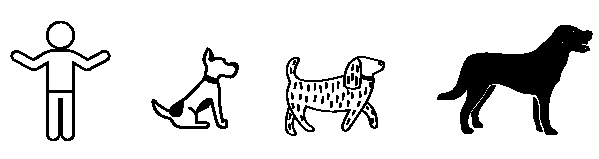
For things that can't be counted, like water, because they are not separate things, and for words that have three syllables, we use 'more' and 'most' in front of the word we are describing.
Example

water
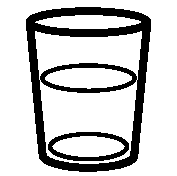 more water
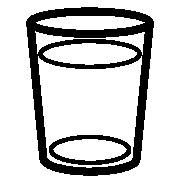 most water
1.2 Adverb 'As'
On the other hand, we can also use the adverb 'as' to compare things. When we mention only one of the things being compared in the sentence, we use 'as' + adjective, but when the thing or person it is being compared to is mentioned in the same sentence, we use 'as' + adjective + another adverb 'as' + the thing/person being compared.
Examples
Gary is nearly as fast at calculating as Mary.
This car is not quite as expensive as the other car.
I am almost as tall as my brother.
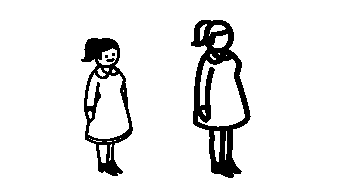
Who is taller? Mary or her sister? Mary is not as tall. Mary is not as tall as her sister.
1.2.1 Add Adverbs for Nuance
There are also some adjectives or adverbs that make our comparisons even more exact or accurate. These include phrases such as 'not quite as . . . as', 'almost as . . . as', and 'nearly as . . . as'.
Examples
Gary is nearly as fast at calculating as Mary.
This car is not quite as expensive as the other car.
I am almost as tall as my brother.
1.3 Adverb Clauses
Adverb clauses using Coordinating Conjunctions or Subordinating Conjunctions (either by themselves or paired) can also be used in comparisons. This is covered in the chapter on sentence structure and adverb clauses. Examples are given below to demonstrate this.
Examples
While John is tall, Mary is short. (subordinating conjunction for contrast)
John is tall, and Mary is tall. (coordinating conjunction for similarities)
Both John and Mary are tall. (paired coordinating conjunction for similarities)
Exercise: Comparatives in Context
Write the comparative forms in the following paragraphs.

When I went back to visit the city I grew up in, I was surprised by the things that had changed and by the things that had not changed. First of all, I went to visit the house I grew up in. The new owner had made it bigger, and it looked newer because he had renovated it. The new owner must have seen me standing there looking at the house for a long time, so he came out to talk to me. I explained that it was the old house I used to live in, and, surprisingly, he invited me in to see the changes he had made.
Some things had not changed. The living room was in the same place as it had been, and it was just as cozy as it had been. Likewise, the kitchen was the same, except that it had new appliances—the stove and fridge were newer, but the cupboards were just as old as they had always been.
Some things had changed, however. The new owner had made some rooms bigger and added some new rooms to better accommodate guests. There was less space in the yard because of the added rooms. The whole house felt more spacious, and because he had added some new bigger windows, the rooms inside were brighter, and they felt less gloomy.
All in all, I think he made the new house better. But I missed the house I grew up in. To me, my old house had a greater connection to my childhood.
| 
Bình luận