A. Changing tastes
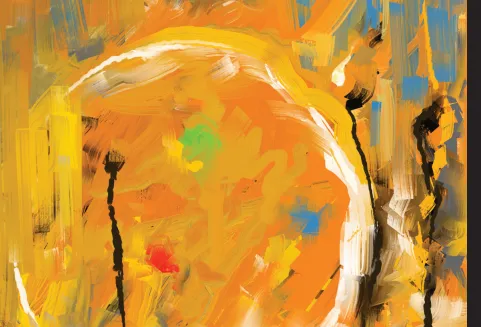 Throughout the centuries, people have tended to be suspicious of the new art movements of their period.
At the end of the 19th century, for example, people were shocked by
Impressionism1, criticising its practitioners as careless
daubers2. Later, when faced with
Cubist3 paintings, the public were puzzled by those too.
The Surrealists4 were initially
deemed5 crazy.
Op-art6 was criticised because its
subject matter7 was said to consist of nothing of significance.
However, nowadays, liking Surrealism8 or
Op-art is considered perfectly acceptable, and images from these
schools of art9 appear everywhere, from posters to advertising campaigns.
Perhaps because of the ubiquity of advertising, people tend to be more
visually literate10 than they used to be, and so are perhaps
inured11 to surprises. Perhaps new movements in art will meet with less hostility in future.
Throughout the centuries, people have tended to be suspicious of the new art movements of their period.
At the end of the 19th century, for example, people were shocked by
Impressionism1, criticising its practitioners as careless
daubers2. Later, when faced with
Cubist3 paintings, the public were puzzled by those too.
The Surrealists4 were initially
deemed5 crazy.
Op-art6 was criticised because its
subject matter7 was said to consist of nothing of significance.
However, nowadays, liking Surrealism8 or
Op-art is considered perfectly acceptable, and images from these
schools of art9 appear everywhere, from posters to advertising campaigns.
Perhaps because of the ubiquity of advertising, people tend to be more
visually literate10 than they used to be, and so are perhaps
inured11 to surprises. Perhaps new movements in art will meet with less hostility in future.
- 1,3,4,6,8 types of artist and schools of art of the last 150 years
- 2 someone who paints quickly and carelessly (disapproving)
- 5 considered; formal
- 7 content
- 9 art movement
- 10 educated with regard to art
- 11 not affected by
B. Words for commenting on art
- original: new in a special and interesting way (opp. = predictable)
- highbrow: intended for educated, intelligent people (often disapproving) (opp. = lowbrow)
- impenetrable: extremely difficult to understand (opp. = transparent)
- sophisticated: showing advanced skills and understanding (opp. = primitive)
- challenging: demanding considerable effort to be understood (opp. = undemanding)
- dazzling: inspiring great admiration because it is brilliant in some way (opp. = pedestrian)
- evocative: calling up images and memories (opp. = uninspiring)
- thought-provoking: making people think (opp. = unstimulating)
- exquisite: having rare beauty or delicacy (opp. = clumsy)
- intriguing: interesting because it is strange or mysterious (opp. = dreary)
- peerless: better than any other (opp. = run-of-the-mill)
- tongue-in-cheek: not intended to be taken seriously, despite appearing serious (opp. = earnest)
- priceless: extremely valuable (opp. = worthless)
- skilful: clever, masterly, done well (opp. = poorly done)
C. Art and metaphor
Notice how words connected with art can be used when talking about literature.
The writer paints his hero in a fascinating light. Minor characters are more shadowy or sketchy
but they are also depicted quite powerfully, even though the focus is, inevitably, on the two
central characters. These are portrayed with great sensitivity. The heroine is particularly
colourful and we see how her character is shaped and moulded by events. Some say the author
illustrates his motifs in a black-and-white fashion, but the image he creates to illuminate the
evils of slavery will remain with me for ever.
|

Bình luận