English Vocabulary in Use Pre-Intermediate (Unit 56: Crime)


A. Different crimes

A crime is an activity that is wrong and not allowed by law. A person who commits a crime is a criminal.

crime person verb
theft [stealing something, e.g. a car] thief steal/take (something)
robbery [stealing from a person or place, e.g. a bank] robber rob (someone, a place)
burglary [getting into a building, usually someone’s home, and stealing something] burglar steal something
burgle (a place)
murder [killing someone] murderer murder

Someone’s stolen/taken my handbag.
I don’t know who robbed me.
Our flat was burgled, but they only took money.
There’s been another burglary in the area.
Did you hear about the bank robbery yesterday?
Do they know who murdered the boy?

B. Reporting crimes in the media

1 entered the building using force, e.g. broke a window
2 with a value of
3 used physical violence to hurt him
4 left the place to avoid danger; syn got away
5 police officers who try to find information to solve crimes
6 If you arrest someone, you take them to the police station because you believe they committed a crime. That person is then under arrest.

C. Punishment*

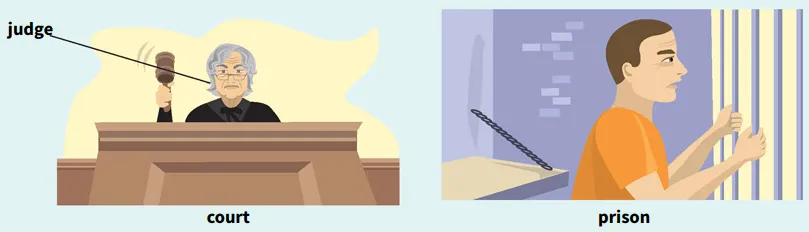
If you commit a crime and the police catch you [find you and arrest you], you will be punished. For minor offences [crimes that are not very important; opp serious], the punishment may only be a fine [money you have to pay], but for serious crimes, you will have to go to court. If you are found guilty [the judge, or a jury of 12 people, decides you committed the crime; opp innocent], you may be sent to prison (syn jail).
* what a person must suffer if they do something wrong


Bình luận


Các task khác trong bài học