|
www.olympiccareers.com/athletes
Unusual Olympic Sports
For many people, the Olympic Games consist of popular sports like swimming, running, or ice
skating. Here are three unusual Olympic events, and three athletes who fell in love with them.
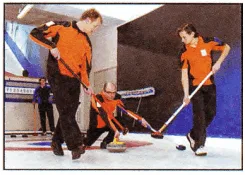
Curling
Curling is a sport that is played on ice. Two teams of four
players each slide eight stones along the ice to a colored
circle (called the house). The object of the game is to
place a stone closest to the center of the house.
"I started curling very young," Canadian Olympic curler
Sammy McCann told us. "My father managed a hotel with
an ice rink. As soon as the people left the ice, my friends
and I would get right on and start curling."
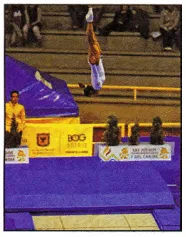
Trampoline
Kids have been jumping on trampolines for almost a hundred years,
but it was only at the 2000 Olympic Games in Sydney that trampoline
became an official Olympic sport. In Olympic competitions, each
trampoline gymnast is judged on ten different skills. A gymnast
can score well by showing that they can control their bodies while
jumping high and twisting and flipping smoothly in the air.
"I love the sport. I've been doing it since I was five years old,"
said Jennifer Parilla, American trampoline gymnast. After Jennifer
competed in the 2000 Olympics (as the only American trampoline
gymnast), she got a tattoo of a butterfly to remind her of her "new
beginnings" as an Olympian.
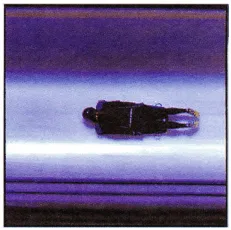
Skeleton
The sport of skeleton racing first became an Olympic sport
in 1928. Skeleton racers slide down an icy course at very
high speed on a simple sled. The sled is called a skeleton
because early sleds looked like human skeletons.
"I didn't start skeleton until I was 30," said American
skeleton racer Zach Gale. "While driving, my girlfriend and I
took a wrong turn at Lake Placid, New York; that's where
the 1980 Winter Olympics took place. They were offering
skeleton classes that afternoon. My girlfriend said, 'Why
don't we give it a try?' It was fun! I fell in love with it."
| 
Bình luận