How Do You Celebrate?
New Year's Day
 New Year is one of the most popular festivals in the world,
even though it is celebrated at different times and in different
ways. In many western countries, people get together with
family and friends on December 31 to eat, drink, and dance as
they wait for January 1. Some of the biggest parties are held
on New Year's Eve. In many cities, crowds gather in the center
of town to welcome the new year at midnight with fireworks.
New Year is one of the most popular festivals in the world,
even though it is celebrated at different times and in different
ways. In many western countries, people get together with
family and friends on December 31 to eat, drink, and dance as
they wait for January 1. Some of the biggest parties are held
on New Year's Eve. In many cities, crowds gather in the center
of town to welcome the new year at midnight with fireworks.
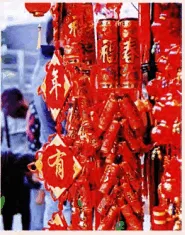
For many Asian countries like China, Taiwan, and Vietnam,
the New Year is based on a lunar calendar.1 The date changes
from year to year, but usually falls between January 21
and February 21. It is traditionally seen as a time for family
reunions, with people traveling across the country and from overseas. Many people
wear red clothes, as it is thought to be a lucky color. They also give "lucky money" in red
envelopes to friends and family, and set off firecrackers2 to scare away bad luck.
What's common among these celebrations is the meaning of the new year; it is a time
to say goodbye to the past and to think about new beginnings. For example, in Japan,
people organize bonenkai parties ("year forgetting parties"), which are dedicated to
leaving the old year's worries and troubles behind. In many countries, people make New
Year's resolutions-promises to themselves to make changes in their lives over the coming
year, such as to lose weight, stop smoking, or learn a new skill.
Carnival
In late February or early March, some
countries celebrate a special festival
called carnival. Carnival is thought to have
originated in Italy or Greece, and was held just
before Lent, the 40-day period before Easter3.
People dressed in costumes, wore colorful
masks, ate, drank, and danced all night. This
tradition spread to France, Spain, Portugal,
and later to Brazil and the United States.
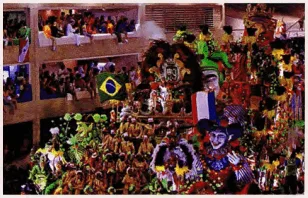
Now, two of the biggest Carnival celebrations
take place in Rio de Janeiro in Brazil, and New Orleans 1n the United States. There are
grand parades where people wear flashy costumes and dance and sing in the streets.
In New Orleans, Carnival is known as Mardi Gras. Many roads and shops are shut down
for the celebrations which can last for up to three weeks. Millions of visitors travel from
around the world to join the party, and many more watch the event on television.
1 A lunar calendar is based on the stages of the moon rather than the sun.
2 A firecracker is a small paper case that can be exploded to make noise
3 Easter is a religious holiday for Christians.
|

Bình luận