Review 4
Fluency Practice 8: The Urban Gardener
Time yourself as you read through the passage. Try to read as fluently as you can. Record your time in the Reading Rate Chart. Then answer the questions below.
The Urban Gardener
Cities are home to skyscrapers and apartment buildings, and it's rare to find wide, open spaces within them. With limited space for parks and gardens, architects and city planners often find it challenging to incorporate greenery in neighborhoods. One creative solution is to grow plants on unused areas like walls and rooftops. It's a popular idea, and now rooftop gardens and green walls have been sprouting up2 in cities around the world.
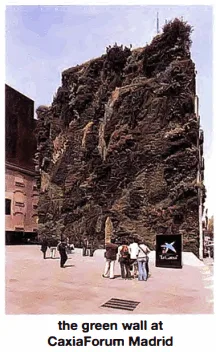
There are many benefits to having green spaces in the urban landscape. Adding gardens to rooftops or walls can create a pleasant environment—what was once a gray cement wall can become a colorful, blooming garden. The CaxiaForum art gallery in Madrid, Spain, is a famous example—one of its walls is covered with 15,000 plants from over 250 different species. In other cities, green walls are being used more functionally, to cover up construction sites and empty buildings and to prominently decorate the lobbies of office buildings.
Using plants to cover walls and rooftops can also keep cities cooler in the summer. Buildings and roads absorb the sun's heat and hold it, causing a building or neighborhood to stay warmer longer. Plants, on the other hand, provide an enormous amount of shade. There is evidence that growing a roof or wall garden can lower a building's energy costs. Many cities offer tax discounts to businesses with these features.
In New York City, public schools plant rooftop gardens that can reduce heating and cooling costs. In addition to saving the school money, teachers and parents love the gardens because of their educational value—it's a fun and healthy way for their kids to investigate the world around them. "For the children, it's exciting when you grow something edible2," said Lauren Fontana, principal of New York's The Public School.
These green spaces are also used to grow food. In recent years, rooftop gardens have slowly been included in the "local food movement." This is based on the concept that locally grown food reduces pollution since it does not have to be transported far. Vegetables are being grown in rooftop gardens by schools, churches, neighborhoods and even restaurants. Chef Rick Bayless serves "Rooftop Salsa" at his restaurant in Chicago, USA, using only ingredients grown in his rooftop garden.
Rooftop gardens and green walls may require a bit more effort to grow and maintain. However, hard work always brings rewards, and with green spaces, the rewards are plentiful.
1 When something sprouts up, it appears suddenly. A sprout is a young plant.
2 Something that is edible can be eaten.
Check Your Understanding
1. What is this article mainly about?
2. According to the article, as cities have little space for gardens, ______.
3. Why is the green wall in Madrid mentioned in the article?
4. Which is NOT mentioned as a benefit of a rooftop garden?
5. Because food can now be grown in cities, ______.
6. Why did Chef Bayless name his dish "Rooftop Salsa"?
7. What is the main idea of the last paragraph?
| 
Bình luận