Ads Are Everywhere!
Reading Skill
Scanning for Proper Nouns
One way to quickly recognize what a reading passage is about is by first scanning for proper nouns. Proper nouns are specific names of people, places, and things. They are easy to find because they start with capital letters.
A Scan the passage below for proper nouns. Write the proper nouns you find in each paragraph below. Then circle the correct option.
Paragraph 2:
This paragraph is probably about (clothing / exercise).
Paragraph 3:
This paragraph is probably about (drinks people buy / entertainment).
Paragraph 5:
This paragraph is probably about (the Internet / animals).
Sample Answers
Paragraph 2: Gucci, Louis Vuitton, Nike → about clothing
Paragraph 3: Coca-Cola, American Idol, Ford, James Bond, Casino Royale → about entertainment
Paragraph 5: Facebook, Red Bull, YouTube → about the Internet
B Now skim the passage to see if your answers in A were correct.
C Read the entire passage carefully. Then answer the questions below.
Motivational Tip: Set a class goal. Together with your classmates, set a class goal for reading rate and reading comprehension for the two chapters in this unit. How many words-per-minute do you think your class can achieve? What level of comprehension can you achieve? Check to see if you have met your class goals at the end of this unit.
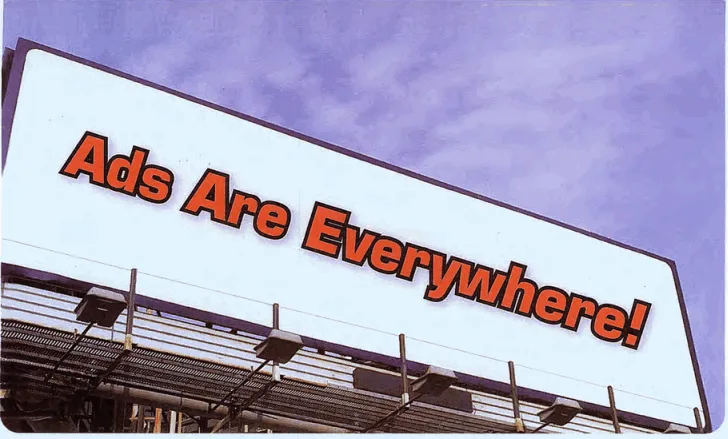
Ads Are Everywhere!
Would you believe that the average person sees nearly 3,000 ads every day? That seems unbelievable, but advertising has become so common that ads are virtually everywhere we look. Furthermore, most advertisements today don't seem like advertising. Newspapers and television are no longer the only way for companies to reach their target audience. Today, advertisers are far more subtle in their selling.
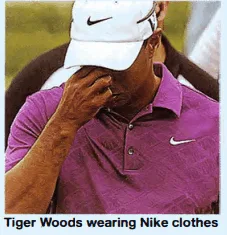
Take a look: your clothes may have a brand name or logo on them. Many designer brands like Gucci and Louis Vuitton display their logo prominently on their clothes and bags. Branding is also very important for big sports companies and professional sports teams. For example, Nike has spent hundreds of millions of dollars creating and promoting their instantly recognizable "swoosh" logo.
Your favorite forms of entertainment are also filled with ads. Companies actively seek to sponsor concerts and TV shows: for example, the Coca-Cola Company sponsored American Idol, one of the most popular shows on American television, since its first season. Similarly, many sports tournaments would be impossible to hold if not for money given by sponsors, who want their ads clearly visible in stadiums. In movies, you'll see characters driving a particular brand of car, or eating a popular snack, because companies pay for their products to be there. In the James Bond film Casino Royale, car manufacturer Ford paid about $22 million for James Bond to drive one of its cars—for only three minutes!
The problem for advertisers is that people have learned to ignore traditional advertising, such as TV ads and billboards. Advertisers must find new ways to get the public to notice them—and continue noticing them. The key word now is "engagement": companies are trying to create deeper, more interactive experiences, which could be anything from contests to parties to charity runs, and link the experience with the brand.
Companies have started using the Internet to reach a wider audience. For example, brand websites can be accessed by anyone, anywhere. Advertisers are using social networking sites like Facebook to post videos and entertaining stories that feature the company's products. Their goal is for people to share these posts with their friends, and eventually reach millions of people. The energy drink company Red Bull has been very successful in creating online content that viewers respond to. By sponsoring and making short films focused on extreme sports like skateboarding and surfing, Red Bull has attracted more than hundreds of millions of views on its YouTube channel.
Advertisers are finding new and different ways to grab our attention. As a result, ads are getting more creative. Instead of telling us what is so special about a product, advertisers are making products part of our lives.
access /ˈæksɪs/ v.
- the right to enter a place or use a thing (quyền truy cập, tiếp cận)
- You need a password to access the Internet. (Bạn cần mật khẩu để truy cập Internet.)
content /ˈkɒntent/ n.
- information (nội dung, thông tin)
- The company's website looks good but it contains no content. (Trang web của công ty trông đẹp nhưng không có nội dung.)
ignore /ɪɡˈnɒr/ v.
- to not pay attention to something on purpose (phớt lờ, lờ đi)
- Jill is ignoring Bob's phone calls. (Jill đang phớt lờ những cuộc gọi của Bob.)
interactive /ˌɪntəˈæktɪv/ adj.
- something that a person can communicate with or that responds to a user's actions (tương tác)
- People prefer to have more interactive content today. (Ngày nay mọi người thích có nội dung tương tác hơn.)
prominently /ˈprɒmɪnəntli/ adv.
- in an important way, easily seen (nổi bật, dễ thấy)
- Her new book is displayed prominently in bookstores. (Cuốn sách mới của cô ấy được trưng bày nổi bật trong các hiệu sách.)
subtle /ˈsʌtl/ adj.
- not easy to notice (tinh tế, khó nhận thấy)
- My two dogs are both brown, with only a subtle difference in color. (Hai con chó của tôi đều màu nâu, chỉ có một sự khác biệt tinh tế về màu sắc.)
visible /ˈvɪzəbl/ adj.
- something that can be seen (có thể nhìn thấy, hữu hình)
- On a clear day, the ocean is visible from my house. (Vào một ngày trời quang, biển có thể nhìn thấy từ nhà tôi.)
virtually /ˈvɜːrtʃʊəli/ adv.
- almost, practically (hầu như, thực tế)
- Virtually all libraries have computers people can use for free. (Hầu như tất cả các thư viện đều có máy tính cho mọi người sử dụng miễn phí.)
|

Bình luận